 IDX & MLS
On this page
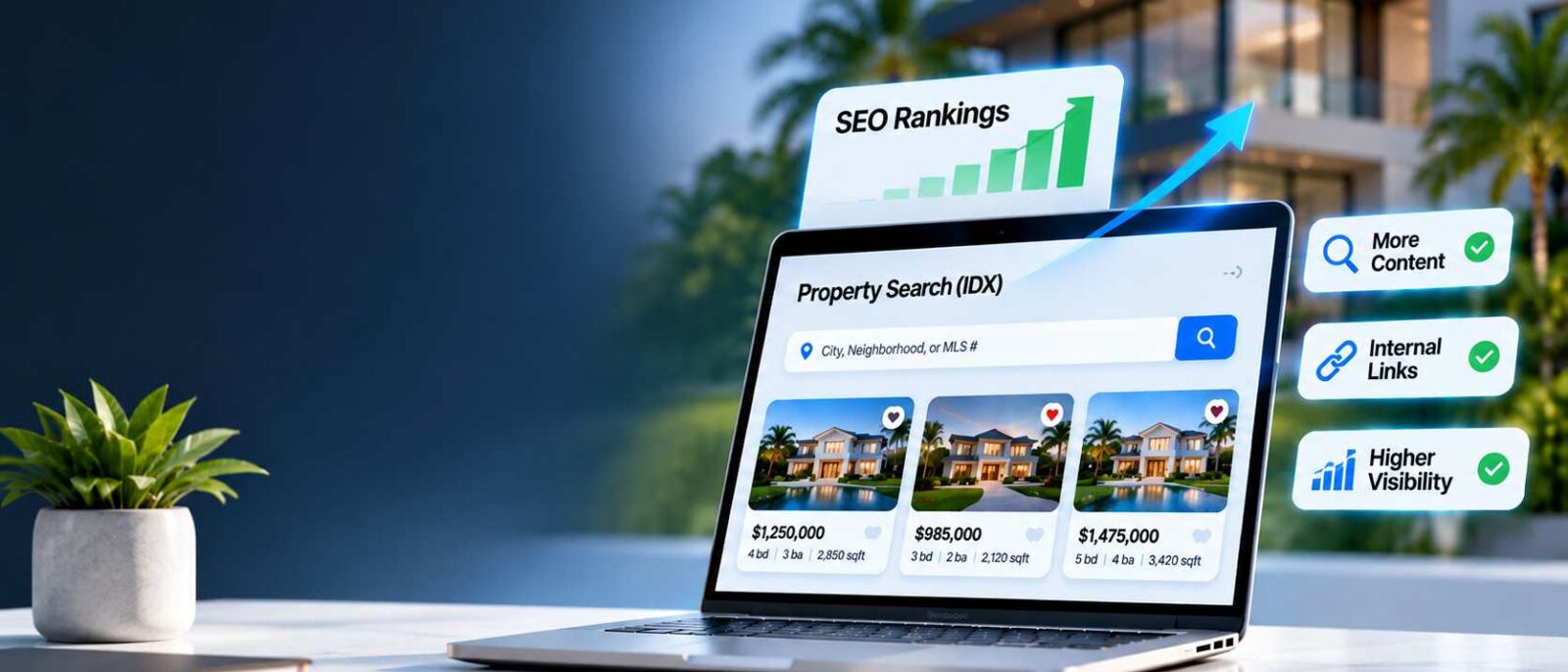
IDX listings can look like an SEO goldmine: thousands of listing pages on your website. Google sees it differently: the same listing, with the same MLS description and photos, is already on Zillow, Realtor.com, your brokerage’s site and hundreds of other agent websites. So do IDX listings help your SEO? Yes, but not the way most agents expect.
Key takeaways
- IDX listing pages rarely outrank the portals on their own, because the same content appears across the web.
- IDX listings help your SEO indirectly: they keep visitors on your site, bring them back and make your local pages more useful.
- Rankings come from what only you can publish: neighborhood guides, market reports, sold stories and your own listings.
How IDX listings pages work
Where your listing pages live decides how much SEO value they can have:
- Embedded frames (iframes). The listings are shown on your page but belong to the provider’s website. Search engines credit the provider, not you.
- Subdomain. Pages live at an address like search.yoursite.com, hosted by the provider. They can be indexed, but the subdomain builds less value for your main domain than pages on the domain itself.
- On your own domain. WordPress IDX plugins can create listing pages at addresses like yoursite.com/listing/123-oak-street. This gives you the most SEO potential.
If you are still choosing a provider, see IDX Broker, Showcase IDX or iHomefinder: how to choose.
Why IDX listings rarely rank on their own
- Duplicate content. When the same listing appears on hundreds of sites, Google picks one version to show for most searches, as it explains in its guide to consolidating duplicate URLs. There is no penalty, but the chosen version is usually a portal with far more authority than an agent website.
- Short life. Listings sell in weeks. By the time a listing page earns any trust, it is often off the market and removed or redirected.
- Little unique content. The description, photos and details come from the MLS. There is nothing on the page that Google can’t find elsewhere.
Google doesn’t need another copy of a listing. It needs a reason to send people to you.
Where IDX listings do help your SEO
- Engagement and return visits. Buyers who search, save and come back spend more time on your site and come back directly, a strong signal that your site is useful.
- Richer local pages. A neighborhood guide with live listings is far more useful than either one alone, and useful pages rank.
- Niche searches. Saved searches turned into pages, such as waterfront homes in a specific town or condos in one building, can rank for specific searches if you add original text.
- Brand searches. People who search your name and “homes for sale” find a complete search on your own website.
- Leads. The real value of IDX is registrations and saved searches, and that is what you should measure it by.
Should you let Google index your IDX listings pages?
For on-domain IDX, a balanced setup works best:
- Let important pages be indexed: your neighborhood and niche search pages with original introductions, and your own listings.
- Keep endless filter combinations, such as every price and bedroom variation and sort orders, out of the index, so search engines spend their time on pages that matter.
- Keep your XML sitemap focused on pages you want to rank.
- Make sure sold or expired listings return a proper status or redirect to a relevant search page instead of piling up as errors.
For subdomain or embedded IDX, there is usually nothing to change. Just don’t expect those pages to carry your rankings.
The IDX listings plus content playbook that ranks
- Build neighborhood pages with live, filtered listings. Our guide to neighborhood pages that rank shows what to include.
- Create niche search pages, such as new construction, waterfront or a specific condo building, each with a few paragraphs of original local insight.
- Publish your own listings in full, with your own description, extra photos, video and neighborhood context. As the listing agent, you are the original source.
- Tell sold stories. A short case study about how a home sold, with results, is content no portal has.
- Post a monthly market report for your main areas with your commentary.
- Get the technical basics right: fast pages, clean URLs, structured data and internal links between listings, areas and articles. Google’s SEO starter guide covers the fundamentals.
How to measure what IDX listings are worth
In Search Console, compare clicks to listing pages with clicks to neighborhood pages and articles. In Google Analytics 4, track registrations, saved searches and showing requests as key events. You will usually find that content pages bring the visits and IDX turns them into leads. That is the system working as it should.
Frequently asked questions
Will IDX listings cause a duplicate content penalty?
No. Duplicate listing content isn’t penalized. Google simply chooses which version to show, usually the strongest site. Your goal is to add original value around the listings.
Is an iframe IDX bad for SEO?
It doesn’t harm your site, but it adds no SEO value because the content belongs to the provider. It can still be a good choice for search and lead capture.
Should I choose my IDX provider based on SEO?
It is one factor. Design, lead capture, CRM connection and MLS coverage usually matter more day to day.
The bottom line
IDX listings are a lead tool first and an SEO tool second. Use them to keep buyers on your website and turn them into leads, and build rankings with content only you can publish. Our IDX and MLS integration and SEO plans are designed to work together for exactly this reason.

Founder of Agent View Digital, Real Estate Website developer and IDX Broker developer partner. He builds real estate websites, IDX search and lead automation for agents, teams and brokerages.
More about us